
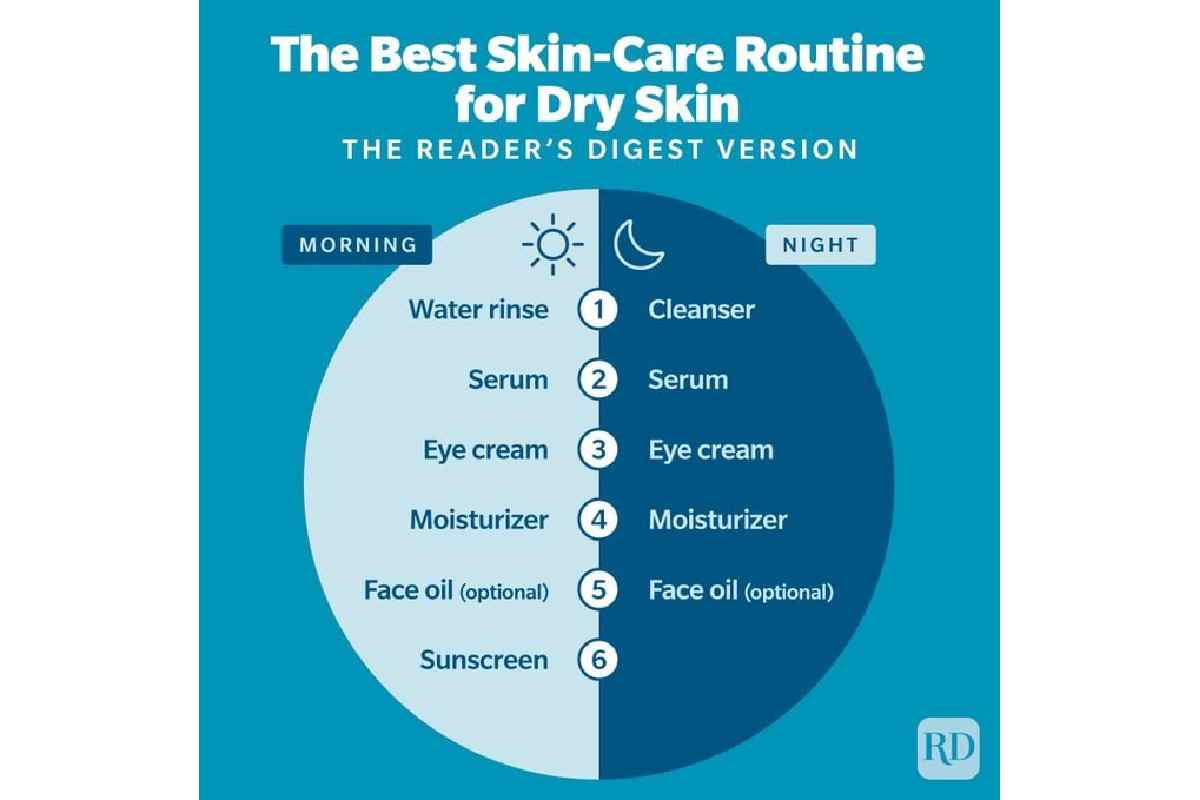
Dry skin skincare is not about using more of a moisturizer, but rather knowing your skin, what to use, and a routine to replenish the skin and bring back moisture to your skin barrier. When it happens that your skin is tight and flaky and sometimes itchy or dull, then this guide will assist you in creating a routine that is working.
Dryness of the skin is quite usual but with proper skincare, one can attain soft, radiant, and comfortable skin on a daily basis.
Table of Contents
What Is Dry Skin?
It is the absence of adequate quantity of natural oils (lipids) or even moisture (water) in the skin that leads to skin being dry. This kind of disproportion leads to the deterioration of skin resistance, allowing moisture to escape and irritants to easily enter the organism.
Common Signs
- Painful or scratching postwash.
- Flaky or peeling skin
- Dull, uneven texture
- Redness or sensitivity
- The occurrence of fine lines that are more prominent.
- The initial step in good skincare of a dry skin is to understand these signs.
| Sign | Description |
| Tightness | Skin feels stretched, especially after washing |
| Rough Texture | Uneven, coarse, or sandpaper-like feel |
| Flaking | Small white flakes or peeling skin |
| Itching | Mild to intense itching due to lack of moisture |
| Redness | Skin appears irritated or inflamed |
| Dull Appearance | Loss of natural glow and softness |
| Fine Lines | Dehydration makes lines more visible |
| Cracks | In severe cases, skin may crack or bleed |
What Causes Dry Skin?
Both internal and external factors may lead to dry skin.
- Environmental Causes
- Cold weather or low humidity
- Excessive sun exposure
- Hot showers or baths
- Lifestyle & Skincare Habits
- Using harsh cleansers
- Over-exfoliating
- Skipping moisturizer
- Employing alcohol based products.
- Other Factors
- Aging
- Genetics
- Medical disorders such as eczema.
Understanding what causes it helps you make the correct decision regarding the kind of skincare you use in dry skin as opposed to making guesses.
| Cause | Explanation |
| Cold Weather | Low humidity strips moisture from skin |
| Hot Showers | Hot water removes natural oils |
| Harsh Soaps | Cleansers with sulfates dry out skin |
| Aging | Oil production decreases with age |
| Dehydration | Not drinking enough water affects skin |
| Sun Exposure | UV rays damage the skin barrier |
| Medical Conditions | Eczema, psoriasis, and thyroid issues |
| Over-Exfoliation | Excess scrubbing weakens skin’s barrier |
Key Skincare Ingredients for Dry Skin
| Ingredient | Function |
| Hyaluronic Acid | A humectant that attracts moisture into the skin. |
| Ceramides | Help rebuild and maintain the skin’s protective barrier. |
| Glycerin | Humectant that draws water into the skin. |
| Shea Butter & Oils | Emollients that soften and soothe dry skin. |
| Urea | Helps retain moisture and gently exfoliates dry skin at low concentration. |
| Occlusives (e.g., petrolatum) | Seal in moisture by forming a protective layer. |
| Niacinamide | Supports barrier repair and hydration. |
A Simple Skin Care Routine for Dry Skin
Skin care on a dry skin is centered on keeping the skin hydrated, fed and shielding the skin barrier. Lack of moisture and natural oils makes the dry skin tight, rough or flaky. A mild and stable routine would aid in regaining a soft, not irritated and skin, as well as keeping it healthy-looking.
Begin with a detergent, non-drying cleanser that is mild and does not strip away natural oils. Use soaps without alcoholic foaming cleansers they also increase dryness. Following cleansing, a hydrating toner or essence with such ingredients as glycerin, hyaluronic acid, or rose water is to be used to restore the moisture.
Following this, a rich moisturizer used in dry skin can be used. Ceramides, shea butter, squalane, and aloe vera are good examples and should be used to restore the skin barrier and keep the skin hydrated. Thirdly, moisturizer should be applied when the skin remains slightly wet.
Sunscreen is required during the day. The skin becomes dry and therefore more vulnerable to UV effects that may raise the level of dryness and early aging. Select an all-round sunscreen that is moisturizing.
It is important to put a nurturing oil or serum on the skin at night to ensure that the skin is highly moistened. Exfoliation can be done weekly with a mild exfoliant which can help shedding off the old cells of the skin and make moisturizers more useful but one should not over exfoliate.
Regular skin care of a dry skin, an intake of adequate amount of water, a lack of hot showers could enhance the skin texture and comfort in the course of time.
Everyday Skincare Routine for Dry Skin
| Step | Product Type | Purpose |
| Cleansing | Gentle, cream-based cleanser | Removes dirt without stripping oils |
| Toning | Alcohol-free toner | Balances skin and adds hydration |
| Moisturizing | Rich moisturizer or cream | Locks in moisture |
| Sun Protection | SPF 30+ sunscreen | Prevents moisture loss and damage |
| Night Care | Nourishing night cream | Repairs skin overnight |
| Weekly Care | Hydrating mask | Restores moisture levels |
The reason a Proper Skincare Routine is important.
The skin should be regularly looked after by the dry skin to heal and safeguard the skin barrier. Lack of the proper routine may aggravate the condition of dryness to an irritated state, premature aging, hypersensitivity.
An effective skincare schedule of dry skin:
- Locks in moisture
- Intensifies the skin barrier.
- Averts scurvy and irritation.
- Enhances the general skin texture.
Everyday Skincare Routine for Dry Skin
1. Morning Cleanser (Gentle) Night Cleanser (Gentle)
Washing is needed and yet severe cleansers may strip away the natural oils.
Look for:
- Cream or lotion cleansers
- Sulfate-free formulas
- Moisturizing substances such as glycerin.
Be careful: Foaming or gel cleaners containing harsh detergents.
2. Hydrating Toner or Essence
A toner will prepare your skin and it will provide an additional boost of hydration.
Some of the best ingredients to apply to the dry skin include:
- Hyaluronic acid
- Rose water
- Aloe vera
This measure increases moisture levels and enhances absorption of products.
3. Moisturizing Serum
Serums provide complexes of hydration and nutrients.
Optimal serums to use on dry skin have:
- Hyaluronic acid
- Ceramides
- Niacinamide
Put it on when your skin is slightly wet so that it can be absorbed well.
4. Rich Moisturizer
This is the greatest process in skincare of dry skin.
Choose a moisturizer with:
- Shea butter
- Squalane
- Ceramides
- Natural oils (jojoba, argan)
In the evening, use the creams that are thicker to nourish your skin so deeply.
5. Sunscreen (Morning Only)
The dry skin also requires sun protection.
Best sunscreen types:
- Cream-based SPF 30 or higher
- Zinc oxide mineral sun screens.
Sunscreen eliminates loss of moisture and early aging.
Weekly Skincare for Dry Skin
Light Exfoliation (1-2 Times a Week)
Exfoliation sheds off dead cells on the skin hindering the absorption of moisture.
Best options:
- Lactic acid
- PHA (polyhydroxy acids)
- Mild enzyme exfoliants
- One should avoid harsh scrubs: these will increase dryness.
Hydrating Face Masks
Use a hydrating mask one or two times a week.
Look for masks with:
- Honey
- Hyaluronic acid
- Oat extract
These are quick fixing and radiant.
Skincare for Dry Skin in country wise
| Country / Region | Dry Skin Skincare Focus & Approach |
| South Korea | Emphasis on layered hydration with toners, essences, serums, rich moisturizers, and sheet masks. Korean routines focus on boosting the skin barrier and long-lasting moisture, often using ingredients like hyaluronic acid, centella, and ceramides — integrated through multiple lightweight layers rather than heavy creams alone. |
| Japan | Japanese beauty (J-Beauty) centers on hydration first, using “lotions” (hydrating toners), milky textures, and products designed to condition and nourish skin gently. Botanical and fermented ingredients like green tea, rice bran, and camellia oil are common in moisturization strategies for dry skin. |
| China | With a rapidly growing skincare market, consumers increasingly adopt both K-beauty-influenced hydration routines and Western-style barrier repair products. High-performance, gentle formulas and barrier-strengthening serums are becoming more mainstream as dry skin awareness rises. |
| United States | The focus is often on rich moisturizers and dermatologically supported products — including ceramide creams, hyaluronic acid serums, and barrier-repair formulations. Products that address dryness from skin conditions (e.g., eczema) are widely used. There’s also strong interest in sensitive-skin-friendly options. |
| India | Traditional and modern approaches blend together: in colder seasons, layering oils + hydrating creams is common to battle winter dryness. Natural oils (e.g., coconut, almond, sesame) are often used alongside moisturizers with glycerin or hyaluronic acid. Also, Korean products (especially hydrating serums and toners) are becoming very popular for dry skin care. |
| United Kingdom & Europe | Dry-skin care trends emphasize dermatologist-recommended, barrier-friendly products with ceramides and humectants, as well as hydrating routines that protect against seasonal dryness. European consumers often choose rich creams and emollient-based products. |
| Japan & East Asia (combined note) | In addition to lotions/toners and moisturizers, some Japanese routines use double moisturizing—applying both a hydrating base and a richer cream to prevent moisture loss. |
Top Ingredients in Skincare to Use against Dry Skin.
It is all about the selection of ingredients.
Top Hydrating Ingredients
- Hyaluronic Acid: Retains water to the skin.
- Glycerin: Increases the levels of moisture.
- Ceramides: Recover the skin barrier.
- Squalane: Is a replica of natural skin oils.
- Soothing Ingredients
- Aloe vera
- Oatmeal
- Panthenol
These minimise irritation and redness.
Ingredients to Shun When You Have Dry Skin.
There are some ingredients that increase dryness.
- Alcohol (denatured alcohol)
- Strong fragrances
- Sulfates (SLS, SLES)
- Retinol use in excess and without a moisturizer.
Label-reading is always important when selecting skincare when dealing with dry skin.
Dry Skin Care Remedies With a Natural Look.
These may assist you in case you want to use natural alternatives:
Coconut oil: Seals the hydration (better at night)
- Honey: Natural humectant
- Oatmeal: Soothes itchy skin
- Milk or yoghurt masks: Delicate hydration.
Natural remedies should not replace your routine, but rather be used at the same time.
Dry Skin Care Remedies
| Remedy | Benefit |
| Aloe Vera | Soothes irritation and hydrates skin |
| Coconut Oil | Deeply nourishes and softens |
| Honey | Natural humectant that retains moisture |
| Oatmeal | Calms itching and dryness |
| Milk Cream | Improves skin softness |
| Olive Oil | Strengthens the skin barrier |
| Cucumber | Refreshes and cools dry skin |
Lifestyle Tips on how to improve the dry skin.
The products used on your skin are not all that is needed, but also habits.
- Hydration & Diet
- Drink enough water daily
- Consume dairy products (low-fat milk, cheese) and healthy fats (nuts, seeds, fish).
- Add fruits and vegetables which are antioxidants.
- Daily Habits
- Wash with lukewarm water.
- Use moisturizer 3 minutes following bath.
- Wet weather Use a humidifier during dry weather.
These are the long-term habits that promote skincare in dry skin.
Tips on How to Improve Dry Skin
| Tip | How It Helps |
| Drink Enough Water | Keeps skin hydrated from within |
| Use Lukewarm Water | Prevents stripping natural oils |
| Apply Moisturizer on Damp Skin | Seals in moisture better |
| Avoid Alcohol-Based Products | Reduces irritation and dryness |
| Use a Humidifier | Adds moisture to indoor air |
| Eat Healthy Fats | Supports skin elasticity |
| Limit Exfoliation | Protects skin barrier |
Avoid these common errors:
- Over-washing the face
- Omitting moisturizer during hot humid climates.
- Excessive number of active ingredients.
- Ignoring sunscreen
- Acting uniformly is more important than having lots of products.
When to See a Dermatologist
In case your dry skin is serious, sore, or chronic, then see a dermatologist. Such ailments as psoriasis or eczema can be treated medically.
Conclusions on Skincare and Dry Skin.
Dry skin skincare involves caring about the skin softly, keeping skin hydrated and repairing the skin. With the help of proper product selection, the absence of harsh ingredients, and healthy practices, you can make dry and uncomfortable skin soft and glossy.
Also, always keep in mind that the secret of good skincare when working with dry skin is the regularity and simplicity, your skin will be glad.
Also Read: Inhealthfitness.com